STM32 Analog to Digital Converter, Timers & USART

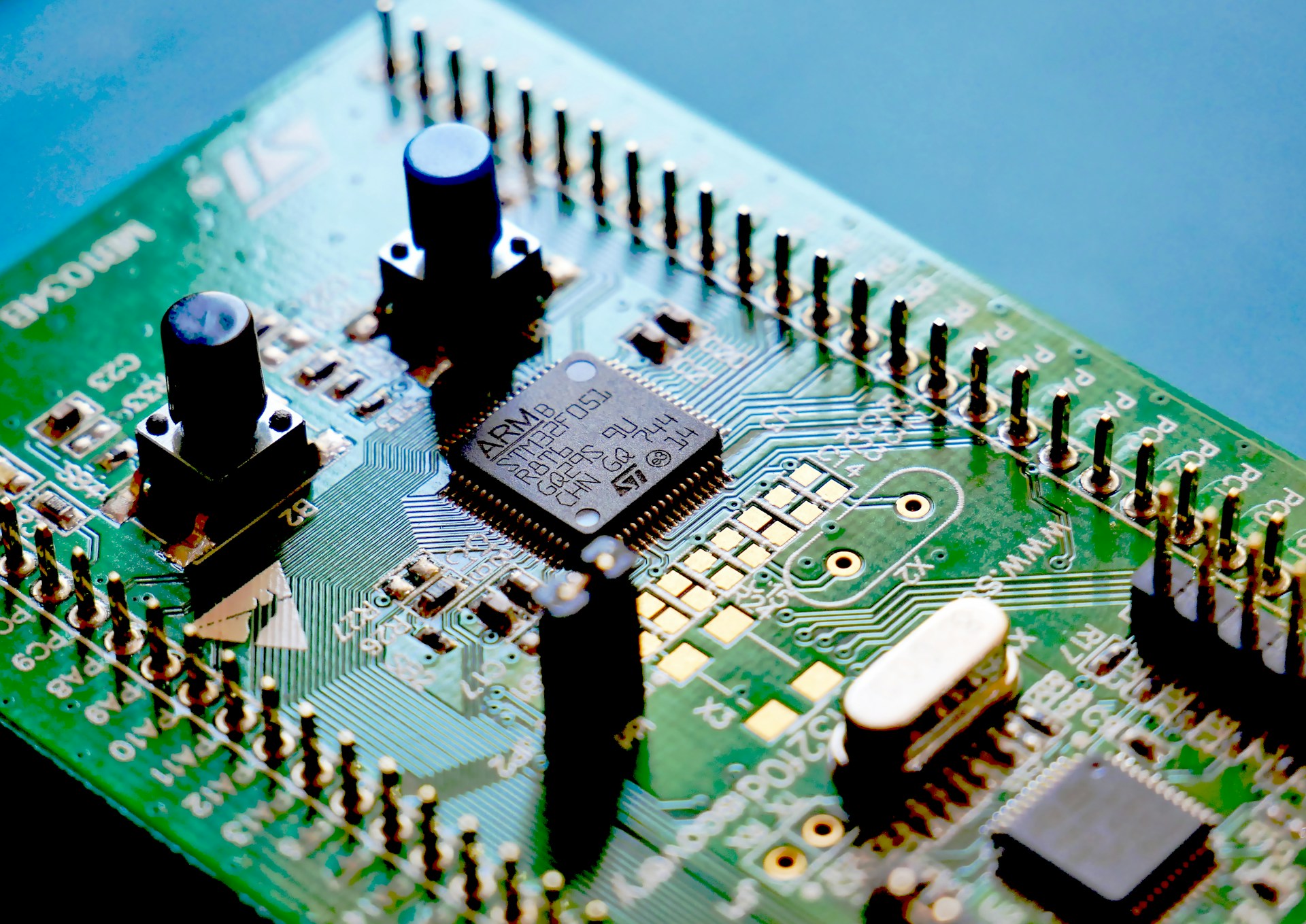
STM32 Analog to Digital Converter, Timers & USART is an embedded systems project carried out on an STM32 Nucleo-64 board, aiming to understand how different peripherals interact in a microcontroller environment.
The goal was to combine timers, analog-to-digital conversion, and serial communication into a single coherent system — a small but complete embedded application built in C.
Technologies
STM32 Nucleo-64
A popular development board based on the ARM Cortex-M3 architecture, ideal for learning embedded systems.
About the Project
The project explores three key parts of the STM32 ecosystem:
- PWM (Pulse Width Modulation) — controlling the brightness of an LED by adjusting the duty cycle of a signal.
- ADC (Analog to Digital Converter) — reading analog input from a potentiometer and internal temperature sensor.
- UART (Serial Communication) — sending sensor data to a computer every second via the serial port.
Together, these elements form a simple data acquisition and visualization system, where sensor readings are measured, processed, and transmitted automatically.
My Role & Contributions
As the developer, I was responsible for the full setup and integration of the STM32 peripherals:
- Configured timers to generate periodic interrupts and PWM signals.
- Programmed the ADC to capture analog values and convert them to digital readings.
- Implemented UART communication to send temperature and voltage data to a serial monitor.
- Used interrupts to manage synchronization and improve real-time behavior.
This required a solid understanding of register-level programming, microcontroller architecture, and data flow between peripherals.
Example of Integration
Every second, the system:
- Reads the potentiometer and temperature sensor using the ADC.
- Adjusts the LED brightness proportionally through PWM.
- Sends both readings to the serial monitor via UART.
This cycle runs autonomously through timer interrupts, illustrating how STM32 peripherals cooperate without relying on an operating system.
Skills Developed
- Embedded C programming for hardware-level control.
- Timer and interrupt management for periodic task execution.
- Signal acquisition and processing using ADC.
- Serial communication protocols (UART).
- Understanding of low-level system design on ARM Cortex-M architectures.
Summary
This project offered a practical introduction to embedded systems engineering, bridging software logic and hardware control.
It demonstrated how to design reliable, low-level systems capable of interacting directly with physical components — a crucial foundation for real-time and IoT applications.